Vampire Survivors
- 4.4
- Rating
- 5.00M
- Installs
- Free
- Price

 Analysis by App-foxy
I first understood the appeal of Vampire Survivors during a short break when I wanted something more active than scrolling but less demanding than a full console game. I could start a run quickly, move with simple controls, and let the action build without needing a long tutorial. That low barrier is the reason Poncle’s arcade game has become such an easy recommendation for people who want a compact game with surprising depth.
It is free to start, aimed at a Teen audience, and available for devices running Android 7.0 or later. The current version is 1.14.111, and the game has passed five million installs with an average score of 4.4 from roughly eighty thousand ratings. Those numbers fit my impression: this is not a niche experiment that takes patience before it becomes enjoyable. It gives you a clear reason to play within minutes, then gradually reveals decisions that make each run feel different.
How it feels in a shared household
The game works particularly well on a phone or tablet that several people in a home might use at different times. A single run can fit into a spare moment, while a longer session gives you room to experiment with weapons, movement, and upgrades. I can imagine one person playing while waiting for dinner, another taking over later, and nobody needing to understand a complicated control scheme before having fun.
You May Also Like

 Blood Strike: 2.5 Anniversary
Blood Strike’s Loadouts Turn Every Drop Into a Tactical Gamble
A close look at Blood Strike’s custom loadouts: how fast access to signature weapons reshapes its battle royale rhythm, rewards preparation, and narrows the gap between fights.

 Pandora - Music & Podcasts
Pandora’s Music Is Easy to Start, but Harder to Recover
Pandora’s strength is its low-effort path from a seed to a station. Its weak spot is how much confidence it asks you to place in connection, setup, and quiet recovery.

 8 Ball Pool
 Is Built on Rivalries, Rematches, and Routine
A close look at the rivalries, rematches, shared routines, and unanswered safety questions that turn a quick pool match into a persistent mobile community.

 Samsung Music
’s Quiet Strength Is Playing What You Already Own
Its reach comes less from spectacle than from dependable access to a personal library. That simplicity is both the app’s strongest retention engine and its ceiling.

 AccuWeather: Weather Radar
AccuWeather Review: A Quick, Clear Forecast for Everyday Decisions
For everyday plans, the best forecast is the one you can understand quickly. AccuWeather makes rain timing, radar, and local conditions easy to act on, with a few trade-offs.

 Hill Climb Racing
Why Hill Climb Racing Still Turns Crashes Into One More Run
A tiny car, a bumpy hill and one more upgrade: Hill Climb Racing keeps resurfacing because its simple chaos makes every near-miss feel personal.
More From Our News Desk



That convenience does not make it a traditional multiplayer household game. The appeal is mainly personal progression and the satisfaction of improving your own choices. If you are looking for a title where two family members can cooperate on the same screen, this is not the right expectation to set. It is better suited to taking turns, comparing discoveries, or handing the device over after a run.
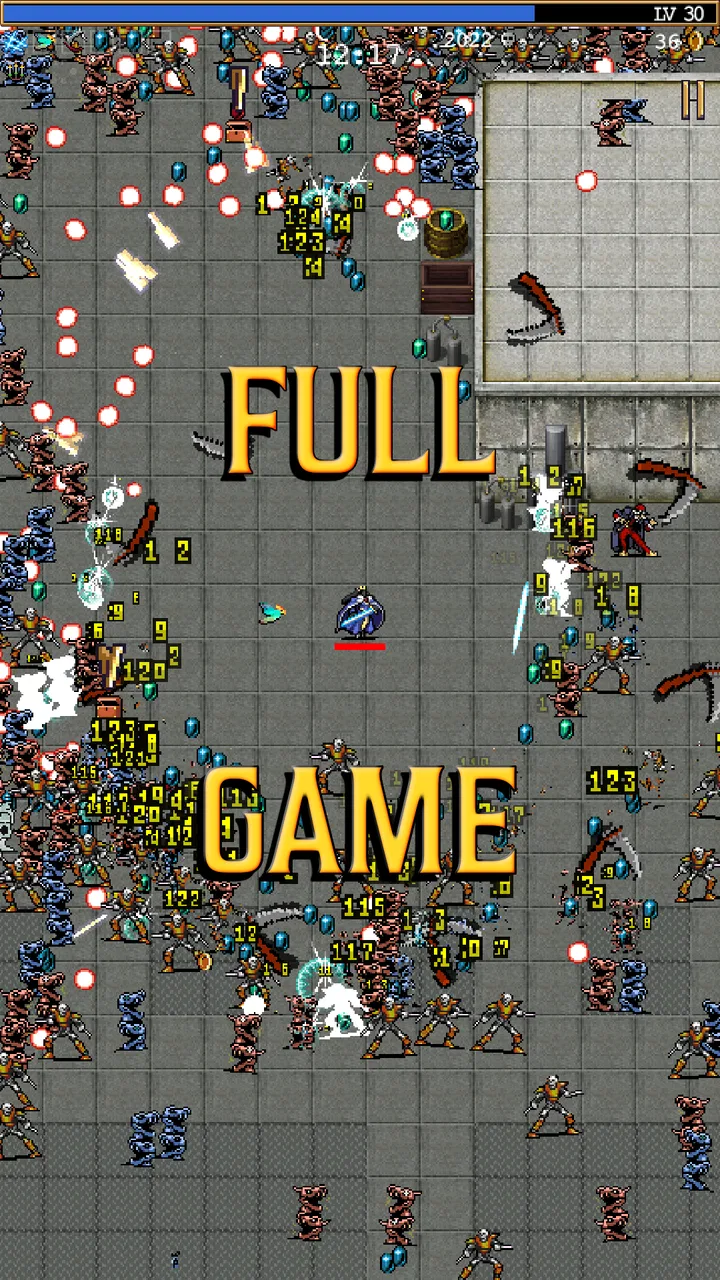
The basic rhythm is wonderfully direct. You guide a character around an increasingly crowded battlefield, collect experience, choose upgrades, and try to remain alive as enemies fill the screen. Attacks generally happen without constant button pressing, so your attention goes toward positioning and planning rather than repeated tapping. That makes it approachable for someone who does not usually play arcade games.
It also creates a useful shared-device habit: the person playing can explain decisions out loud without stopping every few seconds to manage controls. A younger or less experienced player can ask why one upgrade is better than another, and an older player can offer advice without taking over the whole game. The game becomes easy to watch, even when the screen is busy.
Why the simple controls are more strategic than they look
At first, automatic attacks may seem as if they remove the skill from the game. In practice, they shift the skill toward movement. I have to think about where enemies are gathering, which experience gems are safe to collect, and whether a tempting reward is worth crossing an exposed part of the screen. The character may attack automatically, but survival still depends on reading space correctly.
One useful habit is to avoid moving in a straight line for too long. Circling around groups can create a safer route and give attacks more time to work. Another is to resist collecting every nearby reward immediately. Sometimes leaving a gem behind creates a safer return path later, especially when the screen becomes crowded. These small decisions are what separate a calm run from a panicked one.
The game also rewards thinking about combinations rather than choosing every upgrade in isolation. A weapon that covers a narrow direction may become much more useful when paired with something that protects the sides. An upgrade that looks modest can support a stronger plan than a flashy option that does not fit the rest of the build. I found that choosing a coherent setup usually mattered more than chasing the most impressive-looking item.
What a normal session actually looks like
A typical session begins with a quick decision about the character and the direction of the build. During the run, I collect experience, select improvements, and adjust my route as enemy patterns become more demanding. The early portion feels relaxed enough to experiment, while the later portion tests whether my earlier choices made sense.
This structure makes the game good for both short and extended use, but the two experiences are not identical. A brief session can still feel complete because there is immediate action and a clear survival goal. A longer session is where the roguelite design shows its depth, since repeated attempts encourage me to remember what worked, change one part of the plan, and try again.
That repeatability is a strength, but it can also become the main limitation. If you dislike replaying similar stages while refining a build, the automatic combat may eventually feel repetitive. The game does not pretend to be a story-heavy adventure with constant new dialogue or cinematic surprises. Its satisfaction comes from systems, escalation, and gradually becoming better at making choices.
Setting boundaries before someone else uses the device
Because the game is free to download, it is easy to treat it as harmless entertainment and hand over the phone without much thought. I would still set a few simple household boundaries. The Teen content rating matters, and the pixel presentation should not be mistaken for a game designed for very young children. The action is stylized, but it centers on fighting supernatural enemies, so the appropriate age depends on the player’s comfort with that theme.
I would also explain that free access does not necessarily mean every optional element is free. The game includes in-app purchases priced from $1.99 to $3.99 per item. Before sharing a device, I would make sure the person using it understands that purchases are not part of ordinary play and should not be made without permission. This is especially important when a child is borrowing an adult’s phone or tablet.
That conversation is more useful than simply saying “do not buy anything.” It gives the player a clear boundary: play is fine, but spending requires asking first. It also prevents confusion if someone sees an optional purchase screen and assumes it is required to continue. In my experience, the game is enjoyable without turning every session into a shopping decision, but the household rule should still be explicit.
Account separation is another practical consideration. I would not assume that different household members should share the same progress or treat the device as if it were a communal save file. If several people play, agreeing on whose profile or progress is being used avoids arguments later. A shared device can support turn-taking, but shared progress works best when everyone understands the arrangement before starting.
Coordinating turns without taking away the fun
Vampire Survivors is easy to watch because the important decisions arrive at recognizable moments. A person waiting for a turn can suggest a route, discuss an upgrade, or simply observe how the run changes. I like that the game creates conversation without requiring a second controller. It is a quiet form of cooperation, even though the run itself is usually controlled by one player.
Still, advice can quickly become back-seat gaming. I would let the person holding the device make the final choices, particularly if they are learning. One of the pleasures of the game is discovering that an apparently strange option can work when combined with the right movement pattern. Constant correction turns experimentation into a test, and that is the wrong atmosphere for a casual household session.
A better approach is to compare runs afterward. Ask what caused the character to fall, which upgrade felt useful, and whether the player would make the same choice next time. This turns failure into a practical lesson without interrupting the run. It is also a good way for experienced players to explain the game’s deeper ideas without pretending there is only one correct build.
For shared tablets, the larger screen can make the crowded action easier to read, but portability is part of the game’s appeal. On a phone, I can play while commuting or waiting for an appointment, provided I am in a safe place to pay attention. At home, a tablet may be more comfortable for spectators, while a phone is better for private, short sessions. The game adapts well to both situations because the controls remain uncomplicated.
Age, trust, and the visual style
The Teen rating should guide household decisions rather than being ignored because the graphics use pixels. The presentation is playful and deliberately retro, yet the central activity is still defeating large numbers of monsters. Some players will find that cartoon style easy to handle; others may be uncomfortable with the constant combat. I would show the game to a younger family member first and judge their reaction instead of relying only on the art style.
Trust also matters because the game encourages “one more run” thinking. A run can feel unfinished after a poor decision, and the desire to try again is part of its loop. That is enjoyable when the player has free time, but inconvenient when the device is needed for homework, communication, or another person’s turn. A simple stopping point—after the current run, for example—keeps the game from taking over the schedule.
I would be especially careful with children who become frustrated by repeated failure. The game teaches through retries, but it does not make every attempt feel equally rewarding. Sometimes a run ends because the build was weak; sometimes positioning was the real problem; sometimes the screen simply became too difficult to read. Helping a player identify the cause is more constructive than promising that the next run will automatically be easier.
For adults and older teenagers, that same difficulty is often the attraction. There is enough room to test personal preferences, and the game does not require a large time commitment before showing whether a strategy is working. It is a strong fit for someone who enjoys arcade pressure and incremental improvement, but a weaker fit for someone who wants a relaxed game with no possibility of losing progress within a session.
How it compares with familiar arcade alternatives
Compared with a traditional arcade game, this title asks for less rapid button input and more route management. You are not mainly chasing a high score through precise jumps or repeated attacks. Instead, you are shaping a build while surviving a changing crowd. That makes it more approachable for players who like action but do not enjoy demanding reflex controls.
Compared with a conventional role-playing game, it is far more immediate. There is no need to spend a long opening section learning a large world before the core loop begins. The trade-off is that the character and world do not offer the same kind of narrative relationship found in a story-focused RPG. If your priority is dialogue, exploration, or a carefully directed campaign, another genre will serve you better.
It also differs from many idle-style games. Although attacks happen automatically, I am not simply waiting for numbers to rise. Movement, positioning, and upgrade choices remain active throughout a run. On the other hand, players who want direct control over every attack may find the automation limiting. The game sits between idle convenience and active arcade decision-making, and that middle ground is precisely why it works for me.
The roguelite structure adds another trade-off. Repetition is not a flaw accidentally attached to the game; it is the foundation of the experience. Each attempt gives me a chance to test a different approach and understand the battlefield better. But if I want a fixed sequence with a guaranteed ending, I would choose a more linear game instead. This one expects me to enjoy the process of improving through imperfect attempts.
Small decisions that improve a run
My first practical tip is to treat movement as a resource. Do not spend all of your safe space immediately by rushing toward every reward. Leave room to turn, especially when enemies begin closing from several directions. A controlled loop is often more valuable than a direct dash toward a single attractive pickup.
Second, build around a purpose. If the character already has a reliable way to handle enemies in front, I would look for protection on another angle rather than adding another option that does the same job. This reduces the chance of ending up with several strong attacks that leave the same weakness exposed.
Third, use failed runs as evidence. If I keep dying while surrounded, the answer may not be more damage. I may be collecting rewards too aggressively, choosing upgrades without a clear role, or allowing the character to drift into a narrow space. Changing one behavior at a time makes improvement easier to recognize than replacing the entire strategy after every loss.
Finally, do not judge an upgrade only by how powerful it feels in the first minute. Some choices become valuable when the screen is crowded, while others are excellent early but less useful later. I prefer options that support the whole run, even when they look less exciting at the moment of selection. That long view is one of the game’s most rewarding lessons.
Where the free model fits
The free price makes it easy to try without committing money upfront, which suits a game built around quick experimentation. I can discover whether the automatic combat and repeated runs appeal to me before deciding whether I want anything optional. The in-app purchases, ranging from $1.99 to $3.99 per item, are worth keeping in mind for shared devices, but they do not change the basic reason to play.
I would still approach the purchase screens carefully if the device belongs to a household account. The safest routine is simple: the player asks before spending, and the owner checks the transaction themselves. That keeps a casual arcade session from creating an avoidable disagreement about money or account access.
The Teen rating, free entry point, and compact arcade structure make it easy to recommend to older players who want something immediately playable. They do not automatically make it suitable for every member of a family. Age, sensitivity to supernatural combat, tolerance for repetition, and the ability to stop at an agreed time all matter more than the fact that the game looks simple.
My household verdict
After spending time with it, I see Vampire Survivors as an excellent shared-device game when “shared” means taking turns, discussing choices, and respecting account and spending boundaries. It is quick to understand, deep enough to reward advice, and flexible enough for a short break or a longer evening session. Poncle has found a strong balance between automatic action and meaningful player decisions.
I would skip it for a household seeking cooperative play, a calm experience with no combat, or a story that moves forward in a fixed sequence. I would also think twice before giving it to a player who dislikes repetition or struggles with stopping once a run ends. Those are not minor details; they define whether the game feels satisfying or exhausting.
For everyone else, the best way to approach it is to start with a few runs, pay attention to movement rather than button speed, and decide together how the device and any purchases will be handled. Its 4.3 thousand reviews and broad player base reflect its accessibility, but my recommendation is more specific: choose it when you want a compact arcade game that turns simple controls into careful decisions. In that role, it is unusually effective, and it remains one of the easiest games to pass around without making the experience feel shallow.
FAQs for Vampire Survivors
01What is the main objective of Vampire Survivors?
In Vampire Survivors, the primary goal is to survive waves of relentless undead creatures for as long as you can. Players navigate through various levels, collecting power-ups and weapons to increase their chances of survival. The game challenges players to utilize strategic thinking and quick reflexes to outlast the monstrous hordes.
02Is Vampire Survivors available on both Android and iOS platforms?
Yes, Vampire Survivors is available for download on both Android and iOS devices. This ensures that players can enjoy the game on their preferred mobile platform, providing a seamless and engaging gaming experience regardless of the device used.
03Does Vampire Survivors require an internet connection to play?
Vampire Survivors can be played offline, making it ideal for users who wish to game on the go without relying on a constant internet connection. However, some features, such as updates and leaderboards, may require internet access to function properly.
04What are the main features of Vampire Survivors?
Vampire Survivors features a variety of weapons and power-ups, diverse levels, and increasingly challenging waves of enemies. The game also offers customizable characters, each with unique abilities, allowing players to tailor their gameplay experience. The dynamic gameplay keeps players engaged and continually challenged.
05Are there any in-app purchases in Vampire Survivors?
Vampire Survivors offers in-app purchases that allow players to enhance their gaming experience. While the game is free to download, these optional purchases can provide additional power-ups or unlock special features. It’s designed to be enjoyed without spending money, but options are there for those who wish to progress faster.
Pros
- Engaging and addictive gameplay loop.
- Simple controls are easy to learn.
- Variety of characters to unlock.
- Dynamic
- ever-changing levels.
- Low system requirements.
Cons
- Graphics may seem outdated.
- Can become repetitive over time.
- Limited story development.
- No multiplayer mode available.
- Soundtrack can be monotonous.

Vampire Survivors
Gallery